In an era where anyone with deep enough pockets can hitch a ride to the edge of space and back, you’d be forgiven for thinking that Axiom’s Ax-1 mission to the International Space Station was little more than a pleasure cruise for the four crew members. Granted it’s a higher and faster flight than the suborbital hops that the likes of William Shatner and Jeff Bezos have been embarking on, but surely it must still be little more than a publicity stunt organized by folks with more money than they know what to do with?
Thankfully, there’s a bit more to it than that. While the mission was privately funded, the Ax-1 crew weren’t just orbital sightseers. For one thing, there was plenty of real-world experience packed into the SpaceX Dragon: the mission was commanded by Michael López-Alegría, a veteran NASA astronaut, and crew members Larry Connor and Eytan Stibbe are both accomplished pilots, with the latter clocking in thousands of hours on various fighter jets during his time with the Israeli Air Force.
But more importantly, they had work to do. Each member of the crew was assigned a list of experiments they were to conduct, ranging from medical observations to the testing of new hardware. Of course there was some downtime — after all, if you spent $50 million on a ticket to space, you’d expect to have at least a little fun — but this wasn’t just a photo op: Axiom was looking for results. There was no hiding from the boss either, as López-Alegría is not just the Mission Commander, he’s also Axiom’s Vice President of Business Development.
Which makes sense when you consider the company’s ultimate goal is to use the ISS as a springboard to accelerate the development of their own commercial space station. The data collected during Ax-1 is going to be critical to Axiom’s path forward, and with their first module already under construction and expected to launch by 2025, there’s no time to waste.
So what did the crew members of the this privately funded mission to the International Space Station accomplish? Let’s take a look at a few of the more interesting entries from the docket.
While Axiom might technically be in the space tourism business at the moment, their goal is to eventually establish a destination for both government and commercial astronauts to perform space research and manufacturing. Rather than starting from scratch, they want to build onto the ISS with a series of modules that can eventually be detached and act as a free-flying station once the Station has officially been retired.
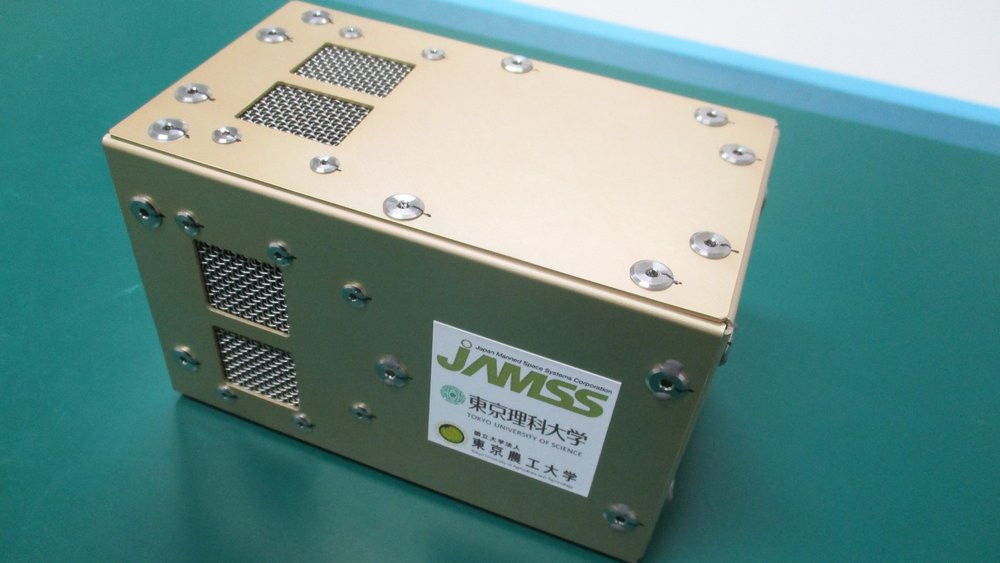
That being the case, it’s no surprise that Ax-1 crew was tasked with evaluating various technologies which would be useful on a near-future space station. Chief among them was a photocatalyst air purification device developed by the Japan Manned Space Systems Corporation (JAMSS). The device uses LEDs and a special filter medium to remove odors from the air, a problem that has long-plagued the 20+ year old orbiting laboratory.
Mission Specialist Mark Pathy was also tasked with studying two-way “holoportation”, a communication technology that allows the user to see a 3D representation of the person they are speaking with through an augmented reality headset.
NASA had previously tested a one-way version of the concept in October of last year, where callers from the ground would appear as if they were on the Station, but the Ax-1 mission debuted the ability for visuals to be transmitted from orbit. Allowing for more personal and interactive communication, NASA believes this tech will become increasingly valuable for long-duration spaceflight.
One of the technologies studied by Eytan Stibbe is a deployable high-gain antenna developed by Israeli startup company NSLComm. Designed so the reflector can be packed up tightly for launch, the antenna can only be tested in a microgravity environment. While primarily intended for small satellites, these sort of deployable structures have been considered a key technology for future orbital facilities and spacecraft.
Naturally, a commercial space station needs to have customers. To that end, technologies which take advantage of the unique microgravity environment offered by a permanent facility in low Earth orbit are of particular interest to Axiom.
Take for example the Fluidic Space Optics project which Eytan Stibbe was responsible for. In microgravity, filing a rigid frame with liquid polymer will naturally produce a perfect spherical shape due to surface tension. When cured with UV light, the result is an optical lens which on Earth could only be produced by laborious grinding and polishing. This technique could potentially allow the production of high quality optics at arbitrary scales, enabling the orbital construction of space telescopes which would be too large or fragile to launch from the ground.
Commander Michael López-Alegría also worked on a small scale demonstration of MIT’s concept for a self-assembling space architecture called the TESSERAE. The edges of which tile feature electropermanent magnets, and with the ability to maneuver autonomously, these tiles could connect to each other to create structures far larger than what could be packed into a rocket’s payload fairing. While obviously on the edge of what’s possible with current technology, TESSERAE is a fascinating look at how embracing microgravity could enable unique forms of extraterrestrial construction.
Axiom currently has a contract with SpaceX to conduct three more flights to the ISS by 2023, all carrying four crew members. Little is publicly known about these future missions beyond the fact that NASA Astronaut Peggy Whitson will Command Ax-2 and race driver John Shoffner will serve as its Pilot. It’s also expected that two of the seats will go to reality show contestants, though as we learned from Mars One, any claims that have their source in the entertainment industry should be taken with a grain of salt.
Whoever ends up strapping into the Dragon on future Axiom missions, we can only hope they are held to the same standard as the crew of Ax-1. With commercial human spaceflight still in its infancy, the imperative should be to send the best and brightest of us on missions that have real impact and tangible benefits. Someday the average retiree might get the chance to chose between a European vacation and a short jaunt to orbit, but until then, there’s plenty of work to be done.