Although the components of wood – cellulose and lignin – are exceedingly cheap and plentiful, combining these into a wood-like structure is not straightforward, despite many attempts to make these components somehow self-assemble. A recent attempt by [MD Shajedul Hoque Thakur] and colleagues as published in Science Advances now may have come closest to 3D printing literal wood using cellulose and lignin ink, using direct ink writing (DIW) as additive manufacturing method.
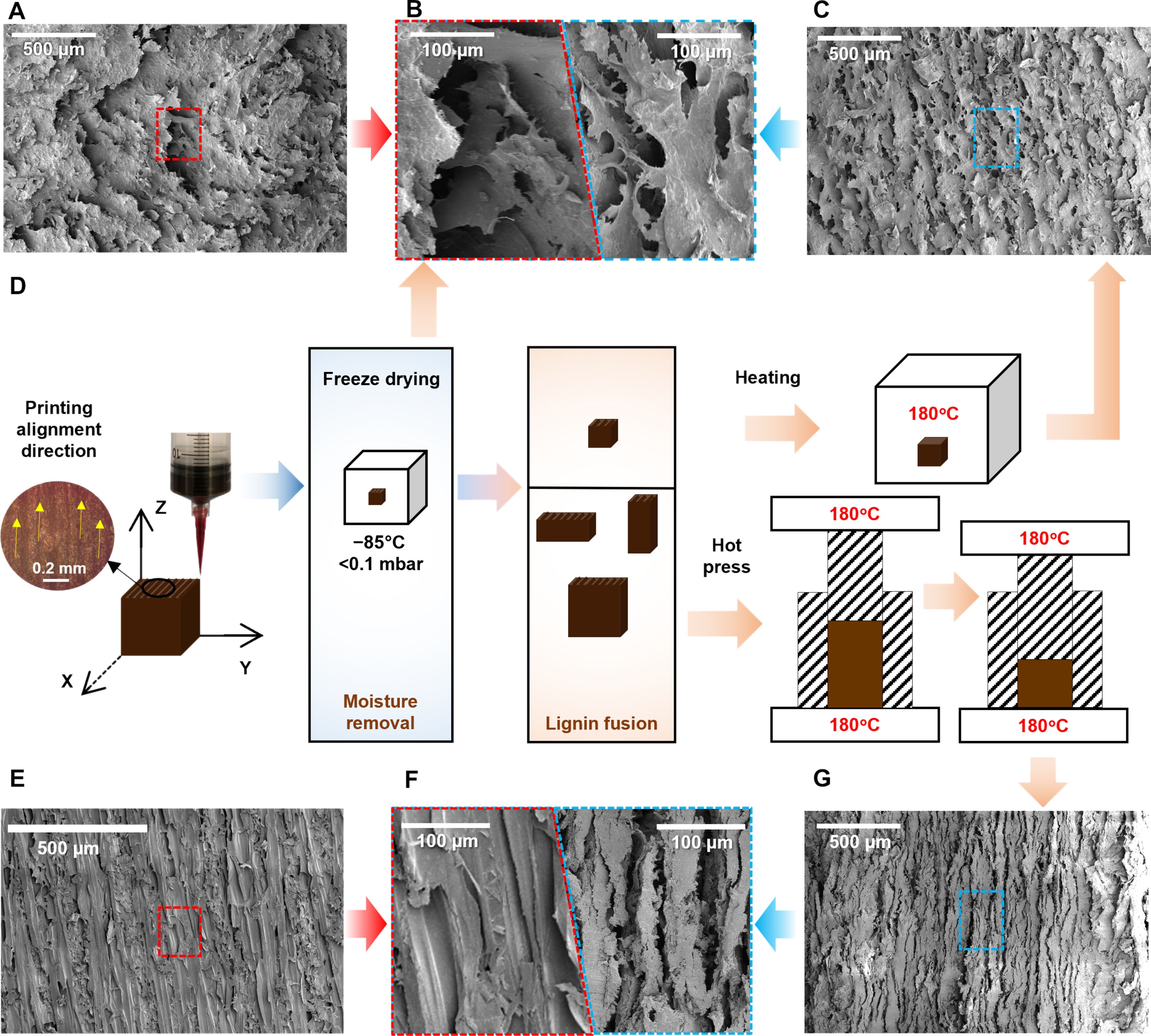
Microstructures of 3D printed wood after printing and post-printing operations. (Credit: Thakur et al., 2024)
This water-based ink was created by mixing TOCN (tempo-oxidized cellulose nanofiber), a 10.6 wt % aqueous CNC (cellulose nanocrystals) and lignin in a 15:142:10 ratio, giving it roughly the viscosity of clay. The purpose of having both TOCNs and CNCs is to replicate the crystalline and amorphous cellulose elements of wood-based cellulose.
This ink was printed from a syringe head (SDS-60) installed in a Hyrel 3D Engine HR 3D printer. This printer is much like your average FDM printer, just targeting bioprinting and a wide range of heads to print and handle various attachments in a laboratory setting. The ink was extruded into specific shapes that were either freeze dried to get rid of the liquid component, or additionally also heated (at 180°C), with a third set of samples put into a hot press. These additional steps seem to promote the binding of the lignin and create a more durable result.
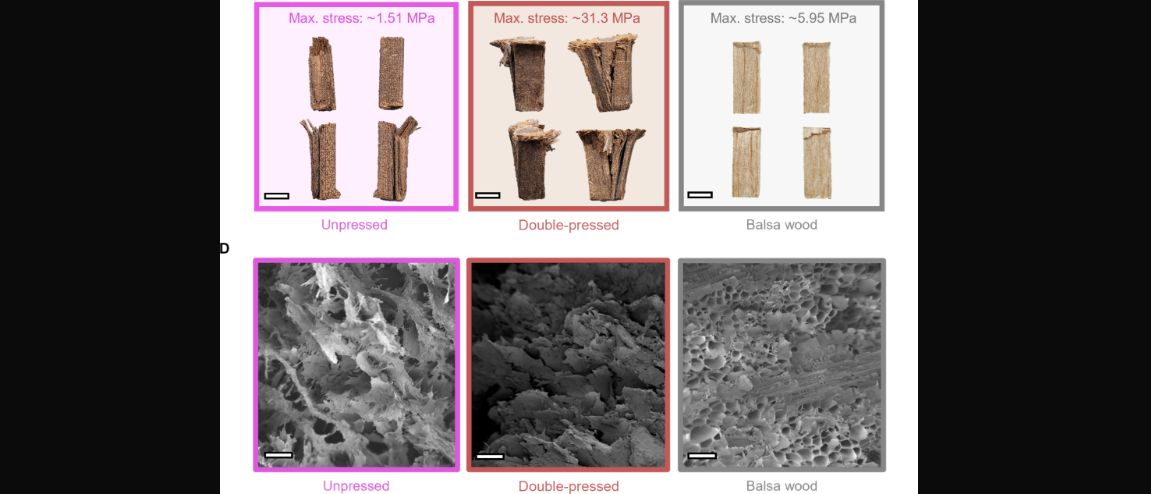
The produced samples were compared against the natural hardwood (balsa wood) which its ingredients were derived from. Not unlike with FDM printing, the heating and pressure seems to promote the annealing between the different layers, which themselves are somewhat similar to the growth patterns found in natural wood. Effectively, the more the samples were pressed in more directions, the better their properties, yet missing from the printed wood are the long fibers that naturally occur during the growth process.
Although promising, the researchers note that the involved steps of freeze drying and hot-press are energy intensive, not to mention cumbersome. These findings do raise the prospect of further developments of this basic ink formulation and post-processing methods which could making it more accessible and efficient. Perhaps one day DIW wood printing will become as much as a stable of hobby rooms and manufacturing facilities as FDM, SLS and SLA printing today.