Call them pet projects, side projects, or hobby projects, projects pursued outside of one’s regular business activity are especially popular among software developers. After all, these projects serve as an excellent way to learn new skills and technologies or to test fresh concepts and approaches. Whether sparked by a spontaneous idea or driven by a constant passion, pet projects are often bolder and more challenging than a developer’s day-to-day work, offering an opportunity for growth.
Stack Overflow research shows that most developers code outside of work as a hobby (68%), and almost 40% code outside of work for professional development or self-paced learning from online courses. Only 12% of the developers Stack Overflow surveyed don’t code outside of work.
Developing smart home applications and games are popular side projects for developers:
At Microsoft Research, I met a computer graphics researcher who was keen on encoding everything he saw around him, including fireworks at Guy Fawkes Night. Another time I was surprised by a developer advocate at JetBrains who turned out to be the author of a conference’s travel system. Developers never stop coding, which helps them stay up-to-date with the rapid advancements in technology.
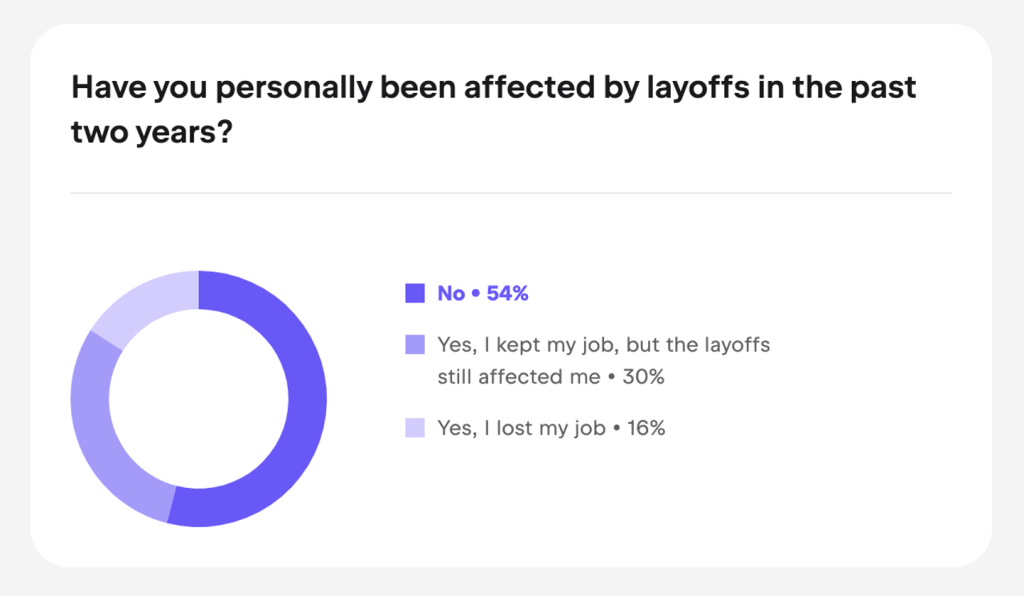
For many developers who experienced layoffs in recent years, working on a pet project became a way to stay in the loop. As reported in the JetBrains State of Developer Ecosystem Report 2024, 16% of respondents were laid off in the past two years, and 14% were working in companies that were affected by mass layoffs.
JetBrains
Developers who lose their jobs often use the downtime to expand their skill set. They might unpack the project they buried under everyday work many years ago and dedicate their time and effort to it, learning new skills and driving new ideas. Not everyone can afford a long break, however. Some developers who lose their jobs focus on educational courses to learn modern technologies and get new jobs quickly. This can still involve contributing to a small pet project as part of the course.
Pet projects can also become a first step in a developer’s professional career. The JetBrains State of Developer Ecosystem Report explored career switchers in tech in 2024, and found the following:
A substantial 22% of software developers who took part in our survey previously worked in different industries, which demonstrates the industry’s accessibility and appeal to professionals from diverse backgrounds. For career switchers, it’s crucial to focus on building a strong foundation in essential programming languages and software development principles. Gaining practical experience through projects, internships, or coding boot camps can help facilitate this significant life change.
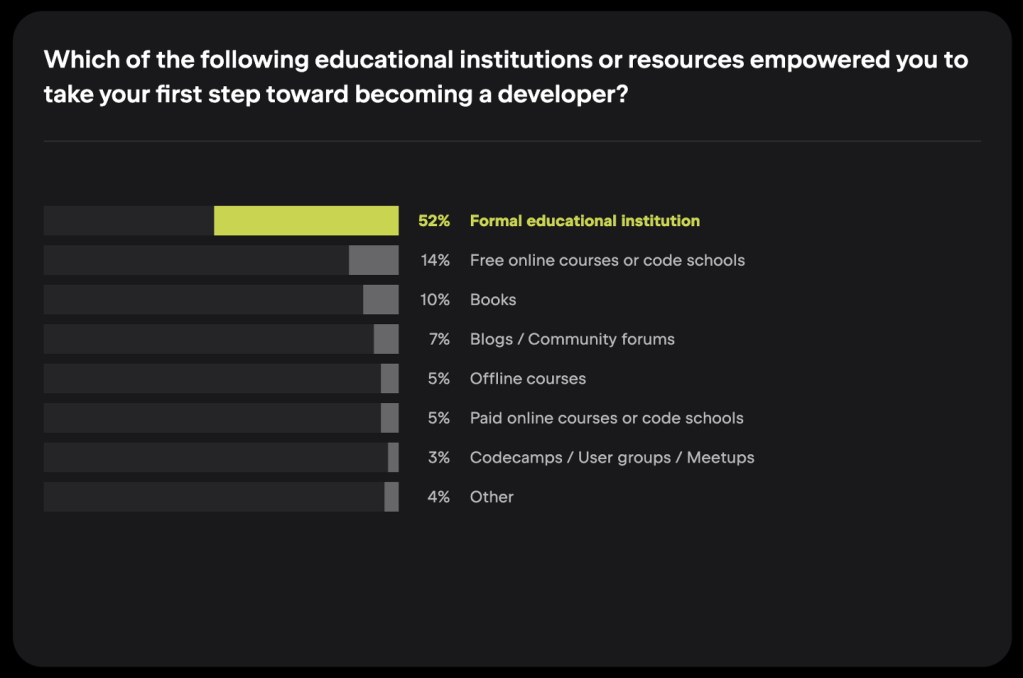
Free online courses and coding schools are the second driving force that led respondents toward becoming developers, according to the report:
JetBrains
Pet projects are promoted by many educational courses or training materials as a key way of learning things. You can implement your independent idea or select from various open-source projects.
Compiler Explorer is now one of the most popular resources among developers. The surname of its creator, Matt Godbolt, became a verb (godbolting), describing the process of diving into the underlying assembly code to understand compiler optimizations and how modern compilers work.
Godbolt works in low-latency trading, where faster code means identifying profitable trading opportunities more quickly and efficiently. In his CppCon 2017 keynote presentation, What Has My Compiler Done for Me Lately?, Matt shared insights he learned from Compiler Explorer after building it. In an interview with JetBrains’s C++ team a month after that CppCon presentation, Godbolt shared the story of the project:
A friend and I were considering whether we could use range-for instead of a normal for-loop, but we wanted to be sure the compiler generated good code for the new feature. I hacked together a quick script to quickly dump the compiler output and Compiler Explorer was born!
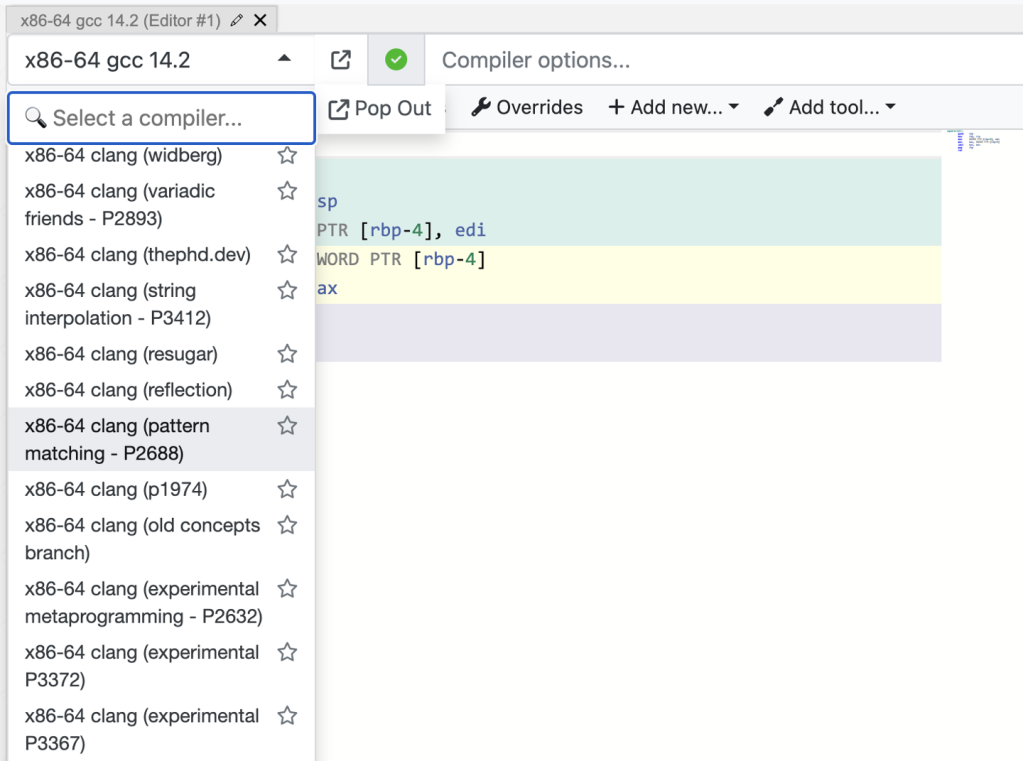
What started as a pet project to help a trading systems developer in his daily work changed the whole community landscape. People are now using Compiler Explorer widely, posting permalinks on the site to share code samples. It has become standard practice for C++ standardization contributors to include links to the code examples in Compiler Explorer in their language proposals. Herb Sutter contributed heavily to this trend with links to metaclass examples running in Compiler Explorer in his proposal. The test implementation in the Clang branch was done before presenting the proposal to the committee, placed in Compiler Explorer, and referenced in the proposal. Nowadays, you can find many more Clang-based branches in Compiler Explorer referenced by one of the dozens of C++ language proposals. Creating a test implementation before getting a new idea approved for the language, or even discussed deeply within the committee, has become a trend.
JetBrains
Many other languages were added to Compiler Explorer by enthusiasts from all over the world. The service is now supported by big companies and their donations. Microsoft even provided Matt with the version of its proprietary MSVC compiler to work in Compiler Explorer. All of this began with a humble pet project.
A pet project culture can reap big rewards for businesses. By giving developers time to express their creativity and explore new ideas, pet projects foster employee satisfaction and spark creativity that can bring innovations to the company at a lower cost. Many well-known products started this way. Just to name a few:
Like JetBrains’s Toolbox App, many of the pet projects that eventually contribute to a company’s core business are born or developed during company hackathons. These are events where employees can present their ideas, invite colleagues to support them, and work on a prototype non-stop for a day or two (sometimes around the clock). Companies encourage employees to participate by providing food, leisure resources like massage or sleeping rooms, and access to internal resources and services. Along with monetary prizes, company-wide award ceremonies are often held to recognize notable projects.
Pet projects can be one-time or recurring. Google’s 20% time policy for pet projects has been adopted by many other large organizations. For small companies or startups that can’t afford to free up 20% of their developers’ time, regular hackathons may be a good option. For companies that can afford a standard time policy, it’s often promoted to the employees as a company benefit, just like longer vacation times or extended insurance.
While there are clear advantages for employees, is a pet project culture beneficial for the company itself? Company leadership would understandably love to get another Gmail or PlayStation launched with minimal costs and without drawing significant resources away from the main business. However, quite often companies run into the following drawbacks of pet projects:
Because many company managers have met the above risks in practice, you can find many articles online that will tell you how to turn a pet project into an official activity that benefits the company. They generally advise the following:
However, balancing company needs with the freedom developers seek for pet projects can be challenging.
Finally, pet projects offer the opportunity to try out new or unfamiliar development tools. For 20% projects, the company might pay for the necessary tools. However, if the project is not part of a company program, then developers may want or need to turn to free tools. Fortunately, many tool vendors allow the use of their commercial technologies for free for non-commercial projects. For example:
Non-commercial licenses suit learning and self-education, hobby development, and content creators. For example, if you plan to start learning game development, you could:
And who knows, maybe game development will become the next big step in your career journey. Whatever the nature of your pet project, you will almost certainly gain knowledge, experience, and skills that your current or future company will find valuable.
Anastasia Kazakova is a C++ developer now working as head of marketing and business development at JetBrains.
—
New Tech Forum provides a venue for technology leaders—including vendors and other outside contributors—to explore and discuss emerging enterprise technology in unprecedented depth and breadth. The selection is subjective, based on our pick of the technologies we believe to be important and of greatest interest to InfoWorld readers. InfoWorld does not accept marketing collateral for publication and reserves the right to edit all contributed content. Send all inquiries to doug_dineley@foundryco.com.